From development to destination: the role of industry clusters
How creative clusters shape a city quarter. How connecting industry, culture, education and community can create lasting value across a mixed-use development.
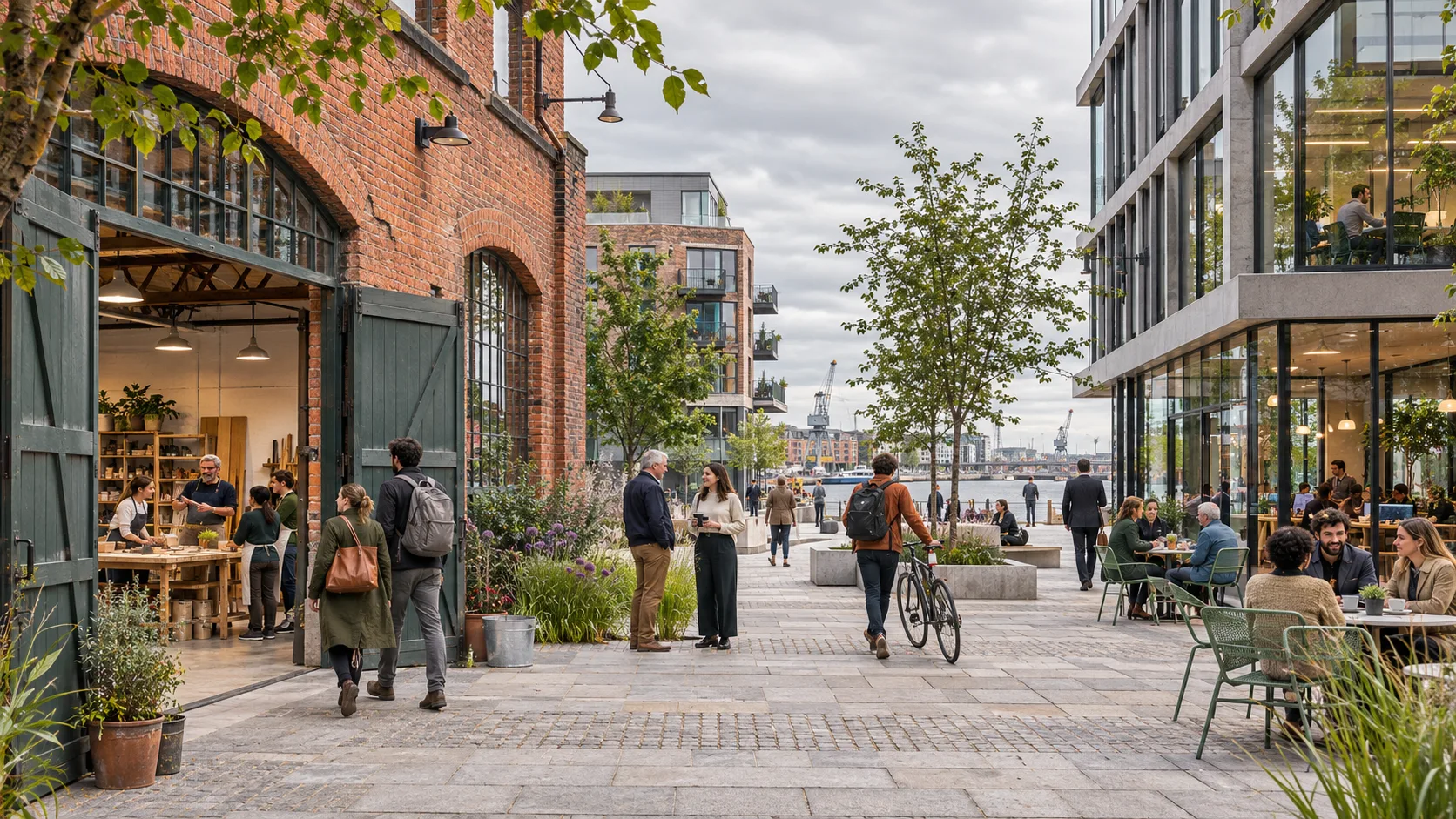
Picture the next major city quarter: homes, workplaces, shops, cultural venues and public space, perhaps anchored by a major employer in entertainment, technology, engineering or health.
The mix creates potential. What turns it into a place people choose is the connections between employers, culture, education and the surrounding community.
So the question for owners and cities, from the first drawings, is simple: who will build those connections, and who will sustain them?
What makes a development work as one place
A masterplan creates the conditions for connection. The relationships themselves need tending for the life of a place: between an anchor and nearby businesses, a cultural venue and its neighbours, new jobs and the people who live around them.
Every site starts differently. Some arrive among established communities, where trust must be earned and opportunities shaped with the people already there. Others transform former industrial land with almost no one there yet, and must attract businesses and people while connecting to the neighbourhoods around them.
Industry clusters are a practical way to build those relationships. A credible sector focus, whether screen, technology, engineering, health or several at once, gives businesses, talent and education a shared reason to collaborate, and gives the development an economic direction. The homes, shops and public spaces still serve everyone; the cluster gives the place its purpose.
Give the anchor a role beyond its front door
A major employer brings people, reputation and spending power. With a clear commitment, its contribution can reach across the district:
Suppliers: local and specialist businesses competing for its work.
Talent: training and skills pathways tied to its workforce needs.
Enterprise: paid pilots and defined challenges with emerging businesses.
Events: programmes that bring people into shared spaces.
These relationships last when each partner has a business reason to stay involved. When they turn into contracts, jobs and local growth, the benefits reach well beyond the site.
Connect culture, enterprise and learning
Cultural space needs a clear purpose, proper resources and room to develop its own voice, serving artists, audiences and communities. It gives a district identity and belonging, not just activity.
Learning is the next connection. Short programmes built with industry and education partners help employers keep pace with changing skills, and help people carry existing skills into new industries.
Retail and hospitality share in the result. Events, workshops and programmes bring people in at different times, keeping the place alive through the day and the week.
Make opportunity accessible
Large developments are judged by what they offer the people around them, not just those who move in.
A well run cluster opens routes in: accessible programmes, apprenticeships, local enterprise and supplier opportunities, and outreach that makes unfamiliar careers visible to young people. Shaped with residents and local organisations, and designed around real barriers such as cost, timing and entry requirements, these opportunities connect the development's ambition to people's lives.
Plan for the whole place, activate in phases
Plan the whole development from the start, then bring it to life in stages. Begin by understanding which sectors the location can credibly serve, what is missing and who is ready to take part. Use early or interim spaces, such as a training programme, a shared facility or an enterprise initiative, to build relationships and test demand before later buildings open. Then expand what works, keeping a clear long term direction as industries and communities change.
Why every development needs an operating brief
Asset managers, letting agents, facilities teams and cultural operators each run their part well. Responsibility for the relationships between those parts is rarely anyone's job.
It needs to be: a clear brief, continuity and accountability, held by a dedicated operator working alongside the existing team. Without it, connections depend on individuals and fade when they move on. It also needs a realistic operating model. Partnerships, cultural programming and accessible learning need resources, so owners and partners should agree early what earned income can carry and what needs ongoing investment.
International places show the range. 22@Barcelona connected former industrial land with technology, research and creative activity at district scale. MediaCity in Salford shows what anchor employers and education can do for a place's identity. STATION F in Paris shows how a single reused building can serve a defined business community. Each answered the same question for its own location: what relationships, facilities and support does this place need to develop its strengths?
The operator of the future
Owners will increasingly need more than efficient building management. They will need the capability to connect businesses, institutions and communities across a whole development, bringing urban regeneration, cluster management and day to day operations into one brief.
That is the perspective we bring to XDanu, shaped by my years leading the Digital Hub Development Agency and our work operating commercial space in Dublin's Docklands. It now informs our work through XDanu Culture House and Culture House Academy.
Where places go from here
The next generation of thriving places will be defined less by their buildings than by what happens between them: the contract won, the career started, the cultural programme that becomes part of everyday life.
Creative clusters grow through relationships that take years to build and need tending for decades. As employers, educators, cultural organisations and communities change, those relationships have to evolve too. Masterplans rarely name who will do that work. They should.
From the first drawings, every major development should have a clear answer. Who will bring these people together, and who will keep them working together for the life of the place?
Written by
Edel Flynn