
The office isn’t waiting to return. Its role has changed.
Demand for workspace hasn't paused. It's changed shape. What that means for buildings that still need a reason to exist.
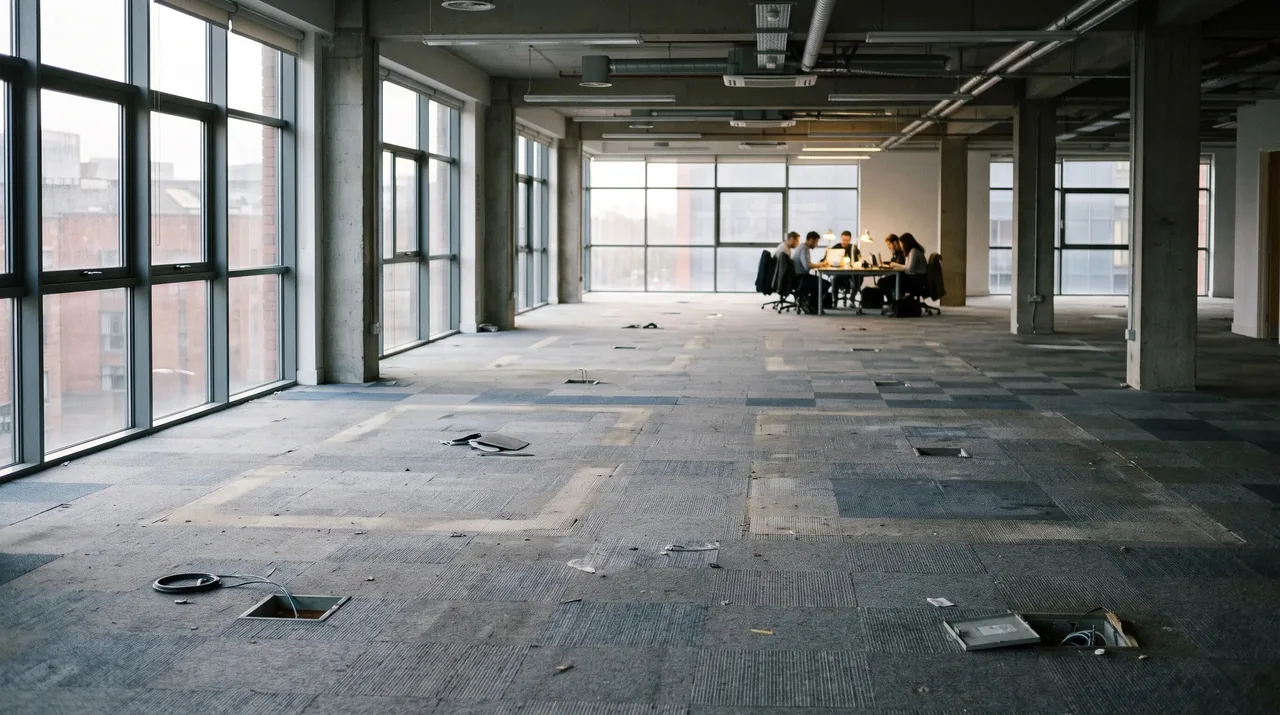
For a few years now, a lot of people in property have been waiting. Waiting for leases to pick back up. Waiting for teams to come back five days a week. Waiting for the old pattern to return.
I don’t think we can build a business around that expectation. And I don’t think that’s bad news.
Companies haven’t stopped needing space. They’re questioning the space they don’t use. For many, that means a smaller footprint with higher expectations: good rooms, somewhere to bring clients, and a reason for people to make the trip in.
It changes the question a building has to answer. Alongside “how much space do you need?” comes another: “what will make this a place your team wants to use?”
What makes people stay
I spent years at Regus overseeing more than 600 office openings across more than 20 countries. One lesson has stayed with me: opening a workspace and keeping it occupied are different disciplines. A serviced workspace operator has to keep earning the customer’s decision to stay. You learn quickly how much depends on the everyday experience: whether problems get resolved, whether the space supports the work, and whether someone takes responsibility when it doesn’t.
The fit-out matters. So does what happens after move-in. People value places where useful connections happen. Where a neighbour might become a client or collaborator. Where an introduction opens a door. Where an event is relevant to their business and worth making time for. That takes more than putting companies beside each other.
A building needs an active purpose
At The Freight Building in The Point Village, we welcome companies across sectors, while building a film, media and technology community as one of the magnets that draws businesses to the building. That experience has reinforced the value of giving companies a reason to choose a place beyond the workspace itself.
The workspace conversation becomes more valuable when it includes who a company could connect with and what could help it grow. That has implications for how a building is operated from the start: the mix of businesses, the shared facilities, the programme of activity and the people responsible for making it work every day. A coffee machine and a breakout area can support that experience. They can’t create it on their own.
The opportunity for building owners
Demand will vary by company, sector and location. Some teams will need more space. Others will need less. But relying on a return to old occupancy patterns leaves too much outside an owner’s control. There is a more useful question: what can this building offer that makes it a compelling place to work?
The answer might be excellent service, access to specialist facilities, a relevant business community or support that helps occupiers grow. Often, it will be a combination. For building owners, this means treating operation and occupier experience as part of the asset’s commercial performance. Filling space matters. Giving people a reason to stay matters just as much.
At XDanu, we start with a simple question: what would make this building irreplaceable to the people using it? That gives us something concrete to work towards: a building with a clear purpose, an active community and an operating model that supports both occupiers and owners.
If you own a building and are considering what comes next, we’d like to talk.
Written by
Edel Flynn